Why Australia Continues to Attract International Students in 2025
Australia maintains its position as the world's third most popular study destination, welcoming over 600,000 international students annually. The country's appeal extends far beyond its stunning landscapes and friendly culture.
Seven Australian universities rank in the Top 100 globally according to QS World Rankings 2025, offering students access to world-class education and research opportunities. Students from 190+ countries study in Australia, creating a welcoming and inclusive atmosphere that fosters global networking and cultural exchange.
The practical benefits are equally compelling. International students can work up to 48 hours per fortnight during term time and full-time during scheduled breaks, helping offset living costs whilst gaining valuable work experience. Post-study work rights extend up to 4 years, with even longer options for certain master's and PhD programmes.
Australia's commitment to student safety and support is evident through mandatory Overseas Student Health Cover (OSHC) and comprehensive student protection laws. Melbourne and Sydney rank amongst the Top 10 Most Liveable Cities in the world according to the EIU Global Liveability Index.
Student Visa Requirements: What's Changed in 2025
Major Updates You Need to Know
The Australian government has implemented significant changes to student visa policies in 2025, focusing on genuine students and application integrity. Understanding these updates is crucial for a successful application.
Confirmation of Enrolment (CoE) Now Mandatory
Starting January 1, 2025, all student visa applicants must provide a Confirmation of Enrolment (CoE) at the time of application. This replaces the previously accepted Letter of Offer and ensures only committed students with confirmed enrolment receive visas.
The CoE serves as definitive proof that you've met all course requirements and paid necessary fees. Education providers issue the CoE once students meet all course requirements and pay necessary fees, serving as definitive proof of enrolment.
National Planning Level (NPL) Cap
Starting January 1, 2025, the Immigration and Citizenship Ministry of Australia has put a cap on the number of international students allowed to immigrate at 270,000. This cap covers 80% of applications, meaning early applicants benefit from faster processing times and more favourable responses.
Enhanced Genuine Student Requirements
The Australian government continues to emphasise the Genuine Student requirement, which as of 2024 replaced the Genuine Temporary Entrant (GTE) requirement. This assessment focuses on whether you genuinely intend to stay temporarily in Australia for study purposes.
Financial Requirements Have Increased
As of May 10, 2024, the Australian government has increased the minimum savings requirement for international student visa applicants to AUD 29,710. This amount covers 12 months of living expenses for the primary applicant.
Additionally, from July 1, 2025, student visa fees are from AUD £2,000 per visa application unless you are exempt, representing a significant increase from previous years.
English Language Proficiency Standards
The change made in 2024 with a minimum English language competency of IELTS level 6.0 or above still remains for 2025. The minimum PTE score for an Australian student visa in 2025 is 42.
Accepted tests include:
- IELTS (minimum 6.0)
- TOEFL IBT
- PTE Academic (minimum 42)
- Cambridge English: Advanced (CAE)
Step-by-Step Visa Application Process
Phase 1: Course Selection and Enrolment
Step 1: Choose Your Course
Begin by selecting a course that aligns with your academic and career goals. Apply directly to the Australian education provider offering the course. Ensure the institution is CRICOS-registered, meaning it has government recognition and eligibility to enrol international students.
Step 2: Secure Your Offer
If the education provider accepts your application, they will issue a Letter of Offer. This letter outlines the terms and conditions of your enrolment. Review the offer carefully, accept it, and sign the acceptance agreement.
Step 3: Obtain Confirmation of Enrolment
After accepting the offer, the education provider will issue a Confirmation of Enrolment (CoE). This digital certificate is essential for your visa application and confirms your committed place in the programme.
Phase 2: Visa Application Preparation
Step 4: Gather Required Documents
Essential documents include:
- Valid passport
- CoE from CRICOS-registered institution
- Proof of financial capacity (AUD 29,710 minimum)
- English language test results
- OSHC policy documentation
- Academic transcripts and certificates
- Genuine Student statement
Step 5: Health and Character Requirements
The Australian Government requires all international students to be in good health before entering the country. You may need to undergo a health examination to meet the student visa health requirement.
There are certain character requirements that you must meet if you want to study in Australia. In your application, you'll have to answer some basic questions about your character and past conduct. In some cases, you may need to provide a police background check.
Step 6: Purchase Overseas Student Health Cover
As an international student in Australia, you must have Overseas Student Health Cover (OSHC) for the duration of your stay. If you don't provide proof that you have this insurance, your student visa application will be refused.
Phase 3: Application Submission
Step 7: Submit Online Application
You apply online using ImmiAccount. You do not need an agent to lodge a student visa application. Submit your application online or at the nearest Australian visa application centre. Ensure all documents are complete and accurate to avoid delays.
Step 8: Monitor Application Status
After submitting your application, monitor its status through your online account. Processing times can vary, so apply well in advance. Processing typically takes 4-6 weeks for complete applications.
Step 9: Receive Visa Grant
Once you receive approval, you will receive your visa grant notice. Review the visa conditions carefully. The visa allows you to live, study, and work part-time in Australia.
Understanding Costs: Tuition and Living Expenses
Tuition Fees by Programme Level
The average yearly fees in Australia can vary depending on the courses (bachelor's/master's or PhD). For example, a bachelor's degree fee can range from £9,000 to £50,000, and a master's degree fee can range from £9,000 to £54,000.
Undergraduate Programmes:
- Arts and Humanities: AUD 20,000 - 35,000 annually
- Business: AUD 25,000 - 40,000 annually
- Engineering: AUD 30,000 - 45,000 annually
- Medicine: AUD 40,000 - 70,000 annually
Postgraduate Programmes:
- Master's degrees: AUD 22,000 - 54,000 annually
- PhD programmes: AUD 20,000 - 40,000 annually
Living Expenses Breakdown
The average cost of living in Australia in 2025 ranges between AUD 1,330 - 2,950 per month for international students. Costs vary significantly by city and lifestyle choices.
Accommodation Costs:
- Shared accommodation: AUD 200 - 600 per week
- One-bedroom apartment: AUD 350 - 900 per week
- University housing: AUD 250 - 500 per week
- Homestay: AUD 200 - 400 per week
Food and Groceries:
Grocery shopping at supermarkets can cost around AUD 80 to AUD 120 per week for essentials. Dining out at restaurants or cafes may range from AUD 15 to AUD 30 for a meal.
Transportation:
Monthly transportation costs can range from AUD 60 to AUD 150 with student discounts. Public transport passes for students cost between AUD 30-70 monthly, depending on the city.
Top Universities and Popular Courses
Leading Universities for International Students
University of Melbourne
- Global ranking: Top 15 worldwide
- Popular programmes: Medicine, Engineering, Business
- Annual tuition: AUD 32,000 - 68,000
University of Sydney
- Global ranking: Top 20 worldwide
- Popular programmes: Law, Medicine, Arts
- Annual tuition: AUD 35,000 - 65,000
Australian National University (ANU)
- Global ranking: Top 25 worldwide
- Popular programmes: Political Science, International Relations
- Annual tuition: AUD 30,000 - 55,000
High-Demand Courses for 2025
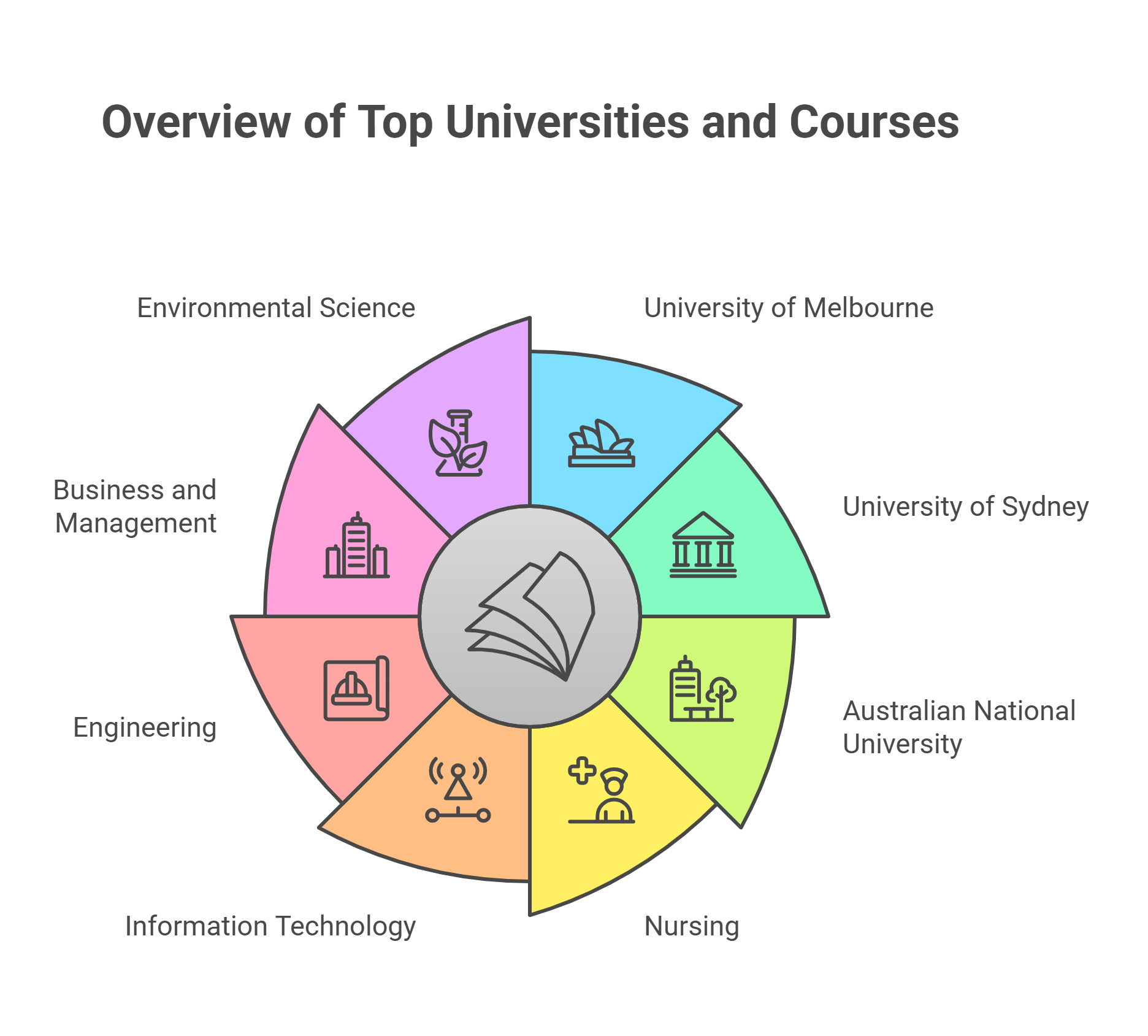
Fields such as Nursing, Information Technology (IT), Engineering, Business and Management, and Environmental Science are amongst the top choices for international students. These disciplines offer robust academic training and promising career prospects in Australia's dynamic economy.
Conclusion
Australia continues to offer world-class education opportunities for international students in 2025, despite increased visa requirements and costs. The key to success lies in thorough preparation, understanding the new requirements, and starting your application process early.
With proper planning and the right documentation, the Australian student visa process becomes manageable. The investment in Australian education pays dividends through quality learning experiences, work opportunities, and potential pathways to permanent residency.
Frequently Asked Questions
Q: How early should I apply for my student visa?
A: Apply 9-12 weeks before your course begins. With the new NPL cap, early applications receive priority processing and better chances of approval.
Q: Can I change my course after arriving in Australia?
A: Yes, but you must ensure the new course maintains your visa conditions and notify the Department of Home Affairs. You may need to apply for a new CoE.
Q: What happens if my visa application is refused?
A: You can appeal the decision or reapply with additional documentation. It's advisable to consult with a registered migration agent to address refusal reasons.
Q: Are there restrictions on which institutions I can choose?
A: You must choose a CRICOS-registered institution. All legitimate Australian education providers must have CRICOS registration to enrol international students.
Q: Can my family accompany me on a student visa?
A: Yes, you can include your spouse and dependent children in your application. They'll receive dependent visas with limited work rights and study permissions.