Understanding the Bridge Course Phenomenon
Bridge courses have emerged as a popular solution to address educational gaps worldwide. These transitional programmes aim to help students navigate the challenging terrain between different educational systems, academic levels, or subject areas.
But are they truly effective educational interventions, or merely temporary fixes that mask deeper systemic issues?
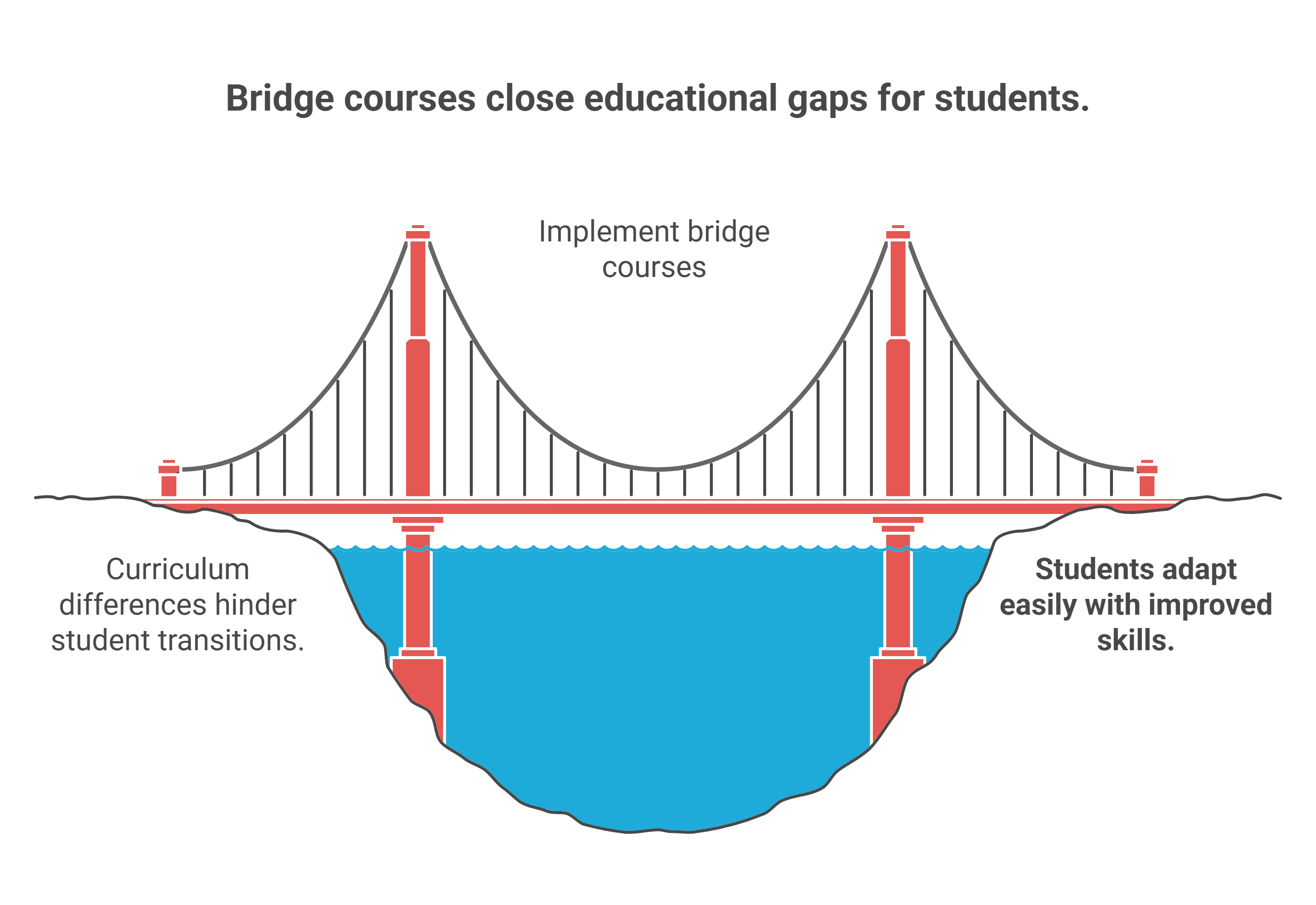
What Are Bridge Courses and Why Do They Exist?
Bridge courses are specialised educational programmes designed to fill knowledge gaps and ease transitions between different educational phases. These courses aspire to bridge the gap between knowledge, skills, and understanding gaps between various education systems.
The need for bridge courses stems from several educational challenges:
Curriculum Disparities
Different educational boards and systems often have varying curricula, teaching methodologies, and assessment patterns. The Annual Status of Education Report (ASER) 2021 highlighted that 72% of students transitioning between boards faced challenges in adjusting to new teaching methods.
Knowledge Gaps
Students frequently enter new educational environments with incomplete foundational knowledge. A meta-analysis of 16 STEM summer bridge programmes revealed a measurable impact in terms of participation significantly influencing the first-year GPA (d = 0.34) and retention rates (OR = 1.747).
Language and Communication Barriers
Bridge courses can help students improve their language skills, allowing them to comfortably comprehend and communicate in the language of education.
The Case for Bridge Courses: Documented Benefits
Research suggests that well-designed bridge courses can deliver meaningful educational outcomes:
Academic Performance Improvements
Research shows that students who undergo bridge courses exhibit improved academic performance in the new system compared to those who don't. The foundational knowledge acquired through bridge courses enables students to grasp new concepts more effectively, leading to enhanced learning outcomes.
Reduced Dropout Rates
By providing students with a solid foundation and addressing the challenges they face during transitions, bridge courses instil confidence and familiarity with the new curriculum, reducing the likelihood of feeling overwhelmed or discouraged.
Enhanced Equity and Inclusion
Bridge courses can level the playing field for students from diverse educational backgrounds. Bridge courses promote inclusivity by addressing disparities faced by students from different educational backgrounds. They create an amicable and congenial environment for students to learn.
The Critical Examination: Are Bridge Courses Enough?
Despite documented benefits, bridge courses face significant criticism and limitations that raise questions about their effectiveness as comprehensive solutions.
The Band-Aid Approach Criticism
Critics argue that bridge courses often address symptoms rather than root causes of educational inequality. Instead of fixing systemic issues like:
- Inadequate teacher training
- Resource disparities between schools
- Standardised curriculum problems
- Assessment methodology inconsistencies
Bridge courses provide temporary remedial measures that may not address fundamental educational gaps.
Limited Scope and Duration
Most bridge courses are short-term interventions, typically lasting weeks or months. This limited timeframe may not be sufficient to address complex, deep-rooted learning gaps that have developed over years.
Quality and Standardisation Concerns
Infrastructure and Resource Limitations: To ensure the effective delivery of bridge courses, adequate infrastructure, teaching materials, and resources must be provided. Schools and educational institutions may require additional funding and support to establish and sustain these programmes.
The effectiveness of bridge courses heavily depends on:
- Quality of instruction
- Availability of resources
- Teacher training and expertise
- Proper needs assessment
The Scripted Learning Debate
Some bridge course models employ highly standardised, scripted approaches to education. Education groups have pushed back on Bridge as using a model that stifles creativity, innovation, and goes against educational research in developed countries.
Critics argue that scripted lessons limit:
- Critical thinking development
- Creative problem-solving skills
- Teacher autonomy and professional growth
- Student engagement and personalised learning
Real-World Implementation: Challenges and Considerations
Resource Requirements
Successful bridge course implementation requires:
- Comprehensive Needs Assessment - Diagnostic tests, surveys, and interviews can help educators understand where each student stands and identify specific knowledge gaps.
- Customised Curriculum Design - Customise bridge courses to suit the unique requirements of different education systems. Flexibility in course design allows educators to address the specific needs of individual students.
- Teacher Training and Development - Professional development programmes should equip teachers with the necessary knowledge and skills to effectively deliver bridge courses and support students during transition.
- Ongoing Monitoring and Evaluation - Regular assessments to track students' progress and adapt the curriculum as needed. Ongoing evaluations allow instructors to identify areas where students may still be struggling.
Financial and Logistical Barriers
Bridge courses require significant investment in:
- Infrastructure development
- Teaching materials and technology
- Qualified instructor recruitment
- Programme administration and oversight
Many educational institutions lack the resources to implement comprehensive bridge programmes effectively.
Alternative Approaches to Educational Gaps
Rather than relying solely on bridge courses, educational systems should consider holistic approaches:
Technology-Enhanced Learning
Well-designed technology initiatives, managed and implemented by qualified and caring educators, can significantly enhance educational opportunities for both teachers and students and help tackle the ongoing global teaching crisis.
Technology can provide:
- Personalised learning experiences
- Access to quality educational content
- Support for undertrained teachers
- Flexible learning opportunities
Systemic Educational Reform
Ensuring that schools in low-income communities receive adequate funding is critical. Disparities in school funding can exacerbate the learning gap, as schools with fewer resources struggle to provide quality education.
Comprehensive reforms should address:
- Funding equity across schools
- Teacher training and retention
- Curriculum standardisation and quality
- Assessment methodology improvements
Community and Family Engagement
Engaging families and communities in the educational process is crucial. Building strong partnerships between schools, parents, and community organisations can create a supportive environment for students.
Making Bridge Courses More Effective
To maximise the potential of bridge courses, educational leaders should:
Focus on Core Competencies
The curriculum should concentrate on core subject areas that are essential for students' future studies. For example, a bridge course designed for science, technology, engineering, and mathematics (STEM) students might prioritise mathematics, scientific principles, and analytical skills.
Develop Essential Study Skills
Bridge courses should emphasise essential study skills and effective learning strategies. Teaching students how to take effective notes, manage their time, and study independently are critical skills that enhance their ability to absorb and retain new information.
Create Supportive Learning Environments
A supportive learning environment is another crucial element of a successful bridge course.
Implement Continuous Assessment
Regular evaluation helps ensure programme effectiveness and allows for timely adjustments to meet student needs.
Conclusion
Bridge courses can be effective educational tools when properly designed, adequately resourced, and implemented as part of comprehensive educational strategies. However, they should not be viewed as complete solutions to educational inequality and system gaps.
The question isn't whether bridge courses are inherently good or bad, but rather how they can be optimised to serve students most effectively whilst addressing underlying systemic issues.
Rather than relying on bridge courses as educational band-aids, stakeholders should view them as stepping stones towards more comprehensive educational reform that addresses root causes of learning gaps and promotes equitable access to quality education for all students.
Frequently Asked Questions
How long do bridge courses typically last?
Bridge courses usually range from a few weeks to several months, depending on the specific gaps being addressed and the educational context.
Are bridge courses expensive to implement?
Implementation costs vary significantly based on programme scope, technology requirements, and teacher training needs. Many institutions struggle with funding comprehensive programmes.
Do bridge courses guarantee academic success?
Whilst research shows positive outcomes, bridge courses are not guarantees of success. Their effectiveness depends on multiple factors including student engagement, programme quality, and ongoing support.
Can technology replace traditional bridge courses?
Technology can enhance bridge courses and provide scalable solutions, but it works best when combined with human instruction and support rather than as a complete replacement.
How can parents support students in bridge courses?
Parents can help by maintaining communication with instructors, providing home study support, and encouraging consistent attendance and engagement with course materials.
Student Testimonials
Dr. Sarah Mitchell, Educational Policy Researcher: "Bridge courses can be valuable transitional tools, but they work best when integrated into broader educational reform efforts. They shouldn't be viewed as standalone solutions to complex systemic issues."
Professor James Liu, Curriculum Development Specialist: "The effectiveness of bridge courses largely depends on implementation quality. Well-designed programs with adequate resources and trained teachers can make significant differences in student outcomes."
Maria Rodriguez, Former Bridge Course Student: "The bridge course helped me adapt to university-level expectations and improved my confidence. However, I still needed additional support throughout my first year to fully succeed."